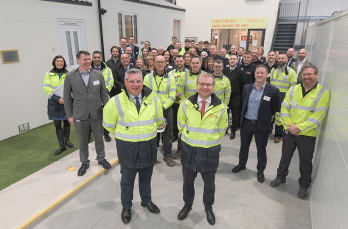


At our Innovation Showcase on 19 March, we caught up with Project Engineer Will Seccombe who is tackling the challenge of decarbonising heat in multi-occupancy buildings head on.
Will shares insights from his work exploring practical pathways, key barriers, and why collaboration across the industry is critical.

Decarbonising our home heating is one of our biggest challenges. But the added complexities posed by multi-occupancy buildings (MOBs) present additional hurdles. And with around 16% of people in the Great Britain living in gas-fuelled MOBs, this is a challenge we can’t afford to overlook.
MOBs, simply put, are buildings with multiple individual units. These can range from two-storey tenements to 30-storey high rise blocks and everything in between. Decarbonising these buildings is a multifaceted problem with a variety of different challenges due to the usually unique building and gas arrangements across the estimated 450,000 MOBs in Great Britain.
I’m a Project Engineer within the Strategy & Regulation directorate at SGN. The work I do sits at the intersection of innovation and engineering where I am exploring both transitional pathways for MOBs and ways to support the wider business in managing our current assets.
Physically these buildings often lack the space required for many heat technologies and the buildings themselves do not currently have the levels of insulation needed for modern low-carbon systems without extensive retrofits. On an infrastructure level, transitioning large blocks to electric heat often requires upgrades to the electricity grid which can be expensive and difficult to install in urban areas.
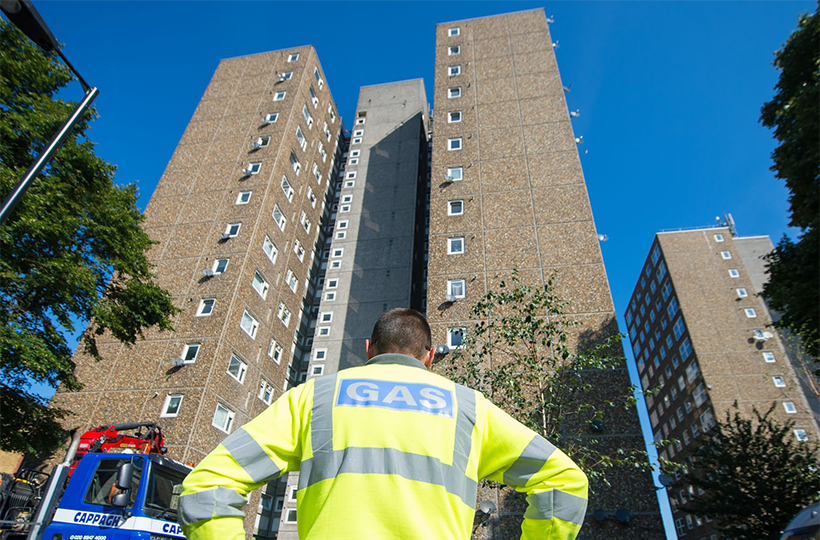
I’m working across a range of projects aimed at understanding how different decarbonisation pathways could be applied to MOBs in practice. We’re taking a data-led view to identify when low-carbon technologies would work best. At the same time, we’re exploring the legislation that governs low-carbon technologies to create a clear framework for making decisions.
There is no single solution for decarbonising MOBs as each building presents its own technical, regulatory, and social challenges. Early engagement with stakeholders is critical, as is taking a whole-system view that considers infrastructure, policy, and customer impact together. We’ve also seen the importance of robust data in enabling better decisions, helping to prioritise where different solutions are most viable. Ultimately, progress in this space relies on collaboration across industry, clear regulatory direction, and a willingness to explore multiple pathways in parallel.
The scale of the challenge is significant, but I am optimistic. As we move from theory to implementation, the focus will shift toward scalable, evidence-based solutions that leave no customers behind.
Events like the Innovation Showcase are invaluable because they bring together experts, innovators, and stakeholders from across the energy system. We simply can’t decarbonise MOBs if, as utilities, we have a siloed approach, and we’ll need experts across all heat technologies to tackle this problem.
Decarbonising our complex building stock is a task too large for any one organisation. I’m keen to hear from others working on urban heat transitions. How are you approaching these hurdles? After all, the best solutions are built on collaboration. You can email me to get in touch.